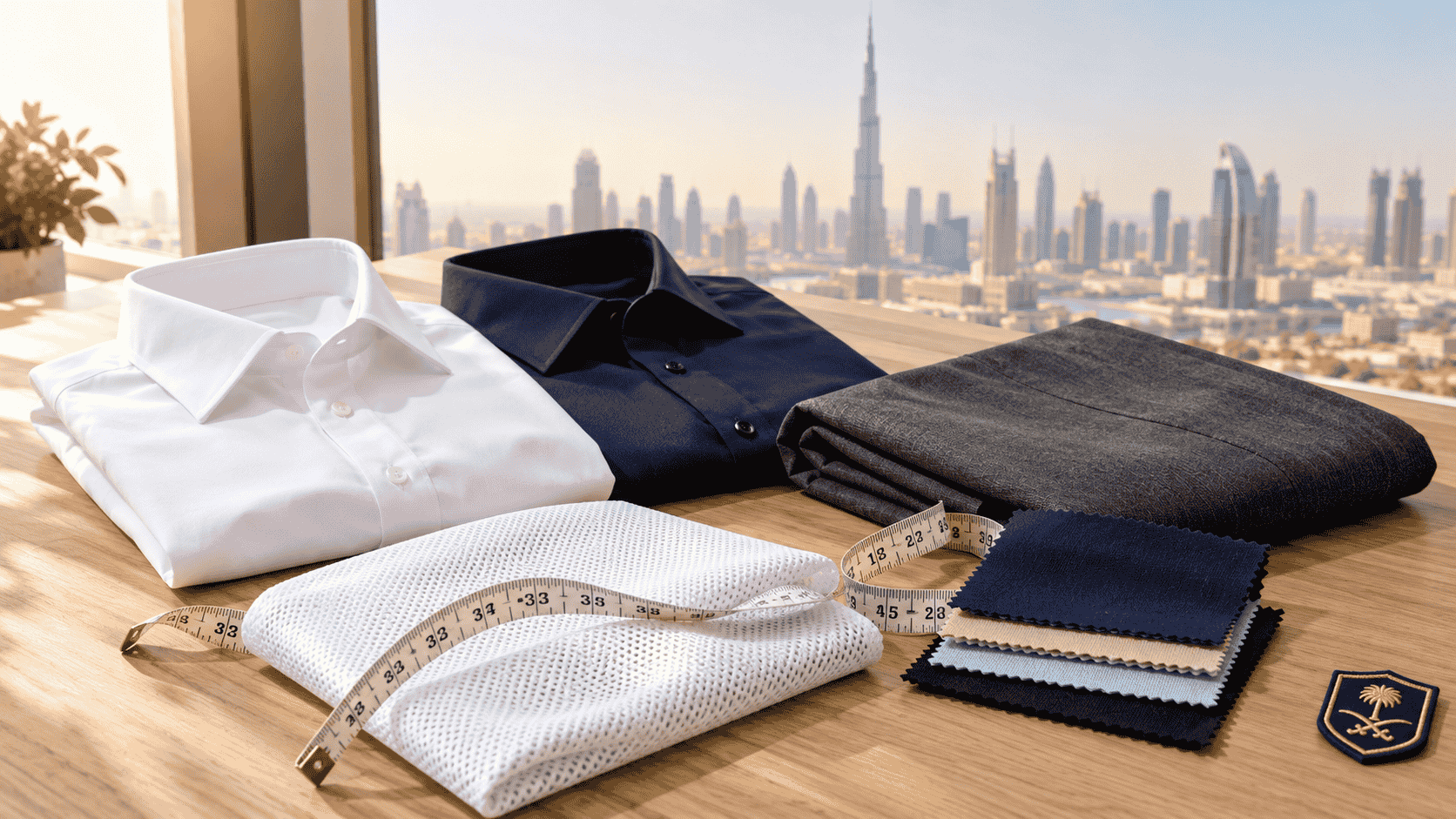
A Best uniform can look perfect on the hanger and still fail on the job. In the UAE, where summer temperatures often pass 45°C and humidity climbs along the coast, the fabric matters more than the design. Choose badly and your staff spend their shifts hot, damp and uncomfortable. Choose well and they stay fresh, confident and presentable from the first hour to the last.
This guide explains the most common uniform fabrics, how each performs in UAE conditions, and which suits your industry.
Why Fabric Choice Matters More in the UAE
Most uniform advice is written for cooler climates. In the Emirates, staff face three challenges at once:
- Outdoor heat: security guards, drivers, valets and construction teams work in direct sun for hours.
- Indoor cold: air-conditioned offices, malls and hotels can be chilly, so indoor staff move between extremes all day.
- Frequent washing: uniforms here are washed far more often than in cooler countries, which wears out weak fabrics and fades cheap dyes.
A good uniform fabric has to breathe, manage sweat, keep its colour and hold its shape through hundreds of washes.
The Main Uniform Fabrics Compared
1. 100% Cotton
Cotton is soft, breathable and gentle on the skin. It lets air move freely, which makes it comfortable in heat. The downsides are that it wrinkles easily, can shrink, and holds moisture instead of wicking it away, so heavy sweating leaves it damp.
Best for: short shifts, light indoor work, T-shirts and casual staff wear.
2. Polyester
Polyester is strong, wrinkle-resistant, quick-drying and keeps its colour well. On its own, though, it traps heat and can feel sticky in humid weather.
Best for: blazers, trousers and structured garments that need a crisp look.
3. Poly-Cotton Blends (e.g. 65/35)
Blends are the most popular choice for UAE workwear, and for good reason. They combine cotton’s breathability with polyester’s durability and easy care. A 65% polyester / 35% cotton blend is a common all-rounder.
Best for: corporate shirts, hotel front-office wear, retail uniforms and general staff uniforms.
4. Performance and Moisture-Wicking Fabrics
These technical fabrics pull sweat away from the skin and dry quickly. Many also include UV protection and anti-odour finishes.
Best for: outdoor teams, delivery staff, event crews and anyone working in the sun.
5. Specialist Fabrics
Some roles need fabric with specific protection:
- Flame-retardant fabric for industrial, oil and gas, and some kitchen roles.
- Antibacterial fabric for hospitals, clinics and laboratories.
- Stretch fabric (with elastane) for roles that involve constant movement.
Best Fabrics by Industry
Hospitality and Hotels
Front-office staff need a polished look all day, so wrinkle-resistant blends are ideal. Housekeeping teams need lighter, breathable fabric because their work is physical. Guest-facing garments should hold their colour so a team always looks consistent.
Kitchens and Restaurants
Commercial kitchens are among the hottest workplaces in the UAE. Chef coats in breathable cotton or cotton-rich blends, with vented panels, help keep chefs cool. Double-breasted coats add a protective layer against splashes and heat. See our chef uniforms for styles designed for busy kitchens.
Healthcare
Medical staff need scrubs that survive repeated high-temperature washing and resist bacteria. Antibacterial, moisture-wicking blends with a little stretch give comfort on long shifts. Explore our medical uniforms range for scrubs, lab coats and nursing wear.
Security and Outdoor Roles
Guards on outdoor duty need breathable, durable fabric with reinforced stitching, and often UV protection. Reflective panels add visibility at night. Our security uniforms are built for both indoor and outdoor duty.
Corporate Offices
Office staff spend most of the day in air-conditioning, so a mid-weight blend works best: smart enough for meetings and comfortable during the commute. Browse our corporate uniforms for shirts, trousers and blazers.
Colour Matters Too
In strong sunlight, lighter colours reflect heat and darker colours absorb it. Many brands still prefer navy, black or charcoal for a premium look. The answer is often to use darker colours for indoor staff and lighter shades, or performance fabric, for outdoor teams, with the brand kept consistent through logo embroidery and accent colours.
Tips for Making Uniforms Last
- Wash in cool or warm water, not hot, unless hygiene rules require it.
- Turn embroidered and printed garments inside out before washing.
- Avoid drying dark uniforms in direct sunlight, which fades colour quickly.
- Give staff enough sets to rotate. Two or three sets per person reduces wear.
Frequently Asked Questions
What is the coolest fabric for uniforms in the UAE?
Breathable cotton and moisture-wicking performance fabrics feel coolest. For a balance of comfort and durability, a poly-cotton blend is usually the most practical.
Is polyester bad for hot weather?
Pure polyester can trap heat, but blended with cotton, or in modern moisture-wicking form, it performs well and lasts longer.
Which fabric is best for chef uniforms?
Cotton or cotton-rich blends are preferred because they breathe well and handle heat safely in the kitchen.
Can uniforms be made with antibacterial fabric?
Yes. Antibacterial fabrics are widely used for healthcare uniforms and can be customised with colours and logos.
Get Expert Help Choosing Your Fabric
Every business is different, and the right fabric depends on your staff’s roles, working environment and brand image. Sohana Uniforms helps businesses across Dubai, Abu Dhabi, Sharjah and the wider UAE choose fabrics that look professional and keep teams comfortable. Contact us for fabric samples and a free consultation.