Introduction
Your logo is the most visible part of any uniform. It tells customers who your team works for before anyone says a word. Yet once the right garment has been chosen, many businesses rush the next decision: should the logo be embroidered or printed?
The answer affects how your custom uniforms look on day one, how they hold up after months of washing, and how much you spend on every order. In the UAE, where uniforms face strong sun, long shifts and frequent laundering, the wrong choice shows quickly. This guide compares embroidery vs printing on uniforms across durability, appearance, comfort and cost, so you can choose the method that fits your team and your brand.
What Is Uniform Embroidery?
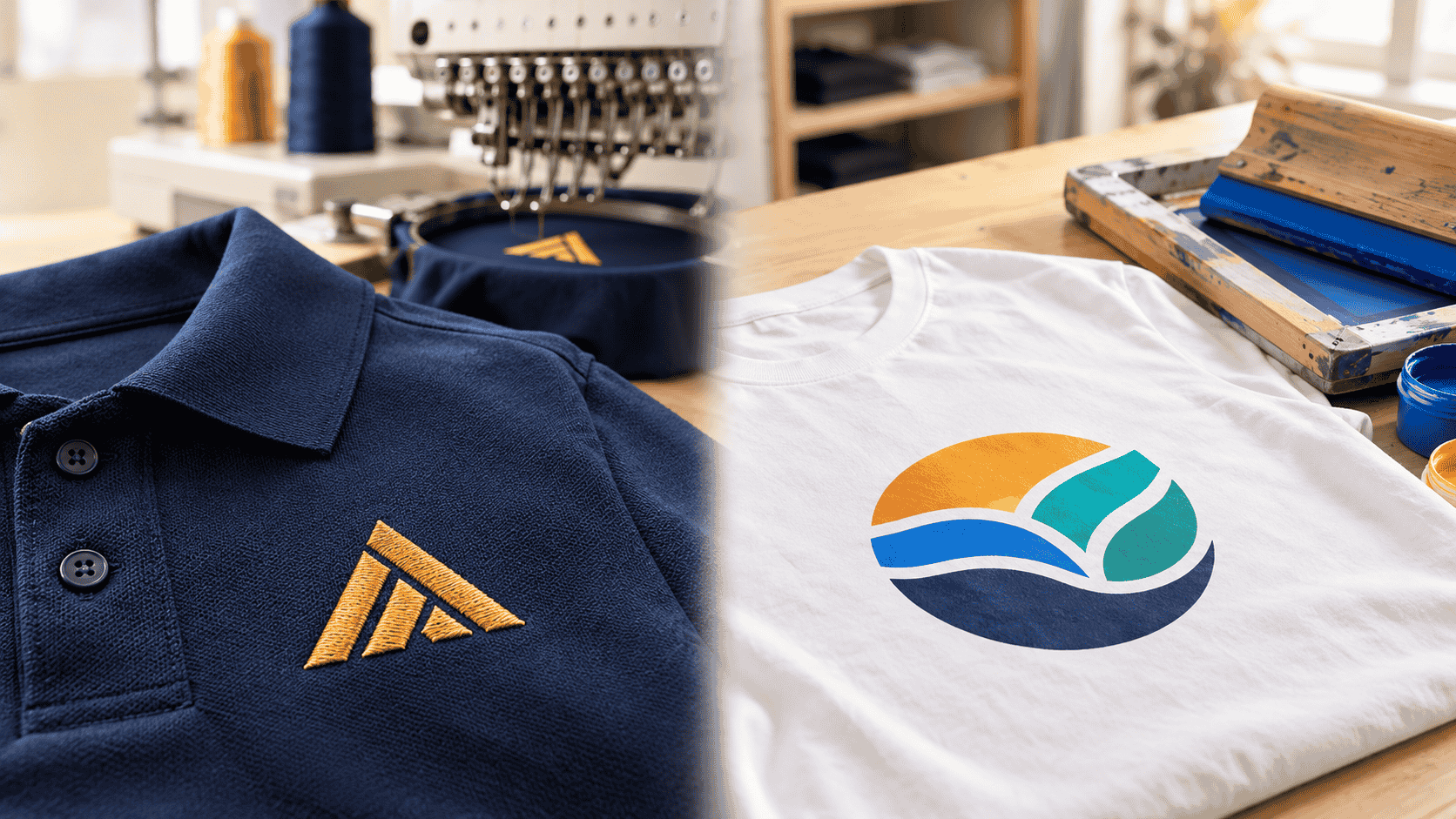
Uniform embroidery stitches your logo directly into the fabric using thread. A digitised version of your design guides an embroidery machine, which builds the logo layer by layer with polyester or rayon thread. The result is a raised, textured finish that sits slightly above the garment surface.
Because the thread becomes part of the fabric, embroidery has a structured and premium feel. It works best on medium and heavier materials such as polo shirts, blazers, chef coats, jackets and caps. It is also the traditional choice for corporate and hospitality brands that want their uniforms to look established and refined. Fine detail is possible, although very small text and complex colour gradients are harder to reproduce in thread.
What Is Uniform Printing?
Uniform printing applies ink or a transfer to the surface of the fabric instead of stitching it in. The most common methods are screen printing, heat transfer vinyl and DTF (direct to film) printing. Each one bonds the design onto the garment rather than building it with thread.
Printing gives a flat, smooth finish and handles detail that thread cannot. Photographs, colour gradients, thin lines and large designs across the back of a shirt are all easy to print. It suits lightweight fabrics such as T shirts, event wear and promotional garments, where heavy stitching could pull or pucker the material. For teams that need bold, colourful branding over a large area, printing is often the more practical route.
Which Lasts Longer?
For most workplaces, embroidery wins on durability. Thread does not crack, peel or fade the way surface prints can, and a well stitched logo often outlasts the garment itself. This matters in the UAE, where uniforms in hotels, kitchens and clinics may be washed several times a week, often at high temperatures.
Printing has improved a great deal, and quality screen prints or DTF transfers can survive many wash cycles. Still, cheaper prints tend to crack, fade or lift at the edges over time, especially when ironed directly or dried in strong sunlight. If your staff wear the same uniform every day for a year or more, embroidery is usually the safer long term investment.
How Each Method Shapes Your Brand Image
Embroidery sends a message of quality and permanence. A neatly stitched logo on a blazer pocket or polo chest looks professional in a bank, a hotel lobby or a corporate reception. That is why most premium businesses choose logo embroidery for their guest facing staff, and why uniforms play such a strong role in building brand identity.
Printing feels more modern and casual. It allows full colour artwork, brighter visuals and larger placements, which is ideal for events, promotions, sports teams and youthful brands. If your identity relies on detailed artwork or many colours, printing reproduces it more accurately. If it relies on a simple logo and a polished image, embroidery usually looks better.
Comfort in the UAE Heat
Comfort is easy to overlook, but it matters during long summer shifts. Embroidery adds a little weight and stiffness where the logo sits, and a large stitched design on a thin shirt can feel heavy and reduce airflow in that area. Keeping embroidered logos small and placing them on the chest, sleeve or collar avoids this problem.
Printing lies flat, but large prints made with thick ink can block breathability across the front or back of a garment. Lighter inks and DTF prints are softer and more flexible. Whichever method you choose, the base fabric still does most of the work, so pairing your branding with a breathable material is essential. Our guide on choosing the best uniform fabric for the UAE climate explains this in more detail.
Cost and Order Size
Price depends on the size of the design, the number of colours and the quantity you order. Embroidery is priced mainly by stitch count, so a small chest logo is affordable while a large back design becomes expensive. There is also a one time digitising cost to convert your logo into a stitch file, though it is usually charged once and reused for future orders.
Screen printing becomes very cost effective on large orders because the setup is spread across many garments, but it is less economical for small batches with many colours. DTF and heat transfer suit smaller runs and detailed designs. As a general rule, embroidery offers better value over the life of a uniform, while printing often costs less upfront for big volumes and short term use.
Which Method Suits Your Industry?
The right choice often comes down to the work your staff do every day.
In hotels and hospitality, embroidery is the standard for front office, concierge and guest relations teams, where a refined look matters most. Our hotel uniforms are commonly finished with stitched logos for this reason.
Restaurant kitchens are tough on clothing. Chef coats and aprons face heat, grease and daily washing, so embroidery holds up far better than print. Our chef uniforms are designed with this in mind.
In healthcare, scrubs and lab coats go through hot and frequent washes, which makes small embroidered names and logos the most reliable option on medical uniforms.
For corporate offices, shirts, blouses and blazers look most professional with discreet embroidery on the chest or cuff, as seen across our corporate uniforms. For events, promotions and casual staff T shirts, printing is usually the better fit, offering bold colour and faster turnaround at a lower cost per piece.
Can You Combine Both Methods?
You do not always have to choose one. Many businesses use both on the same uniform programme. A popular approach is an embroidered logo on the chest for a premium front view, with a larger printed design or slogan on the back for visibility. Others embroider everyday uniforms and use printing for seasonal campaigns, exhibitions and team events. Mixing methods lets you balance cost, durability and style without weakening your brand.
Get the Right Finish with Sohana Uniforms
When comparing embroidery vs printing on uniforms, there is no single winner. Embroidery gives a premium, long lasting finish for daily workwear, while printing offers bold detail and value for large or short term runs.
At Sohana Uniforms, we offer both uniform embroidery and uniform printing, so your garments and branding come together with consistent quality. Our team helps you pick the right method for each garment, digitises your logo for clean stitching, and matches thread and ink colours to your brand guidelines. We supply businesses across Dubai, Abu Dhabi, Sharjah, Ajman and the wider UAE, from small teams to bulk orders.
Explore our printing and embroidery services or request a quote today, and we will recommend the finish that keeps your team looking sharp for longer.